The Antikythera Mechanism: The True Story
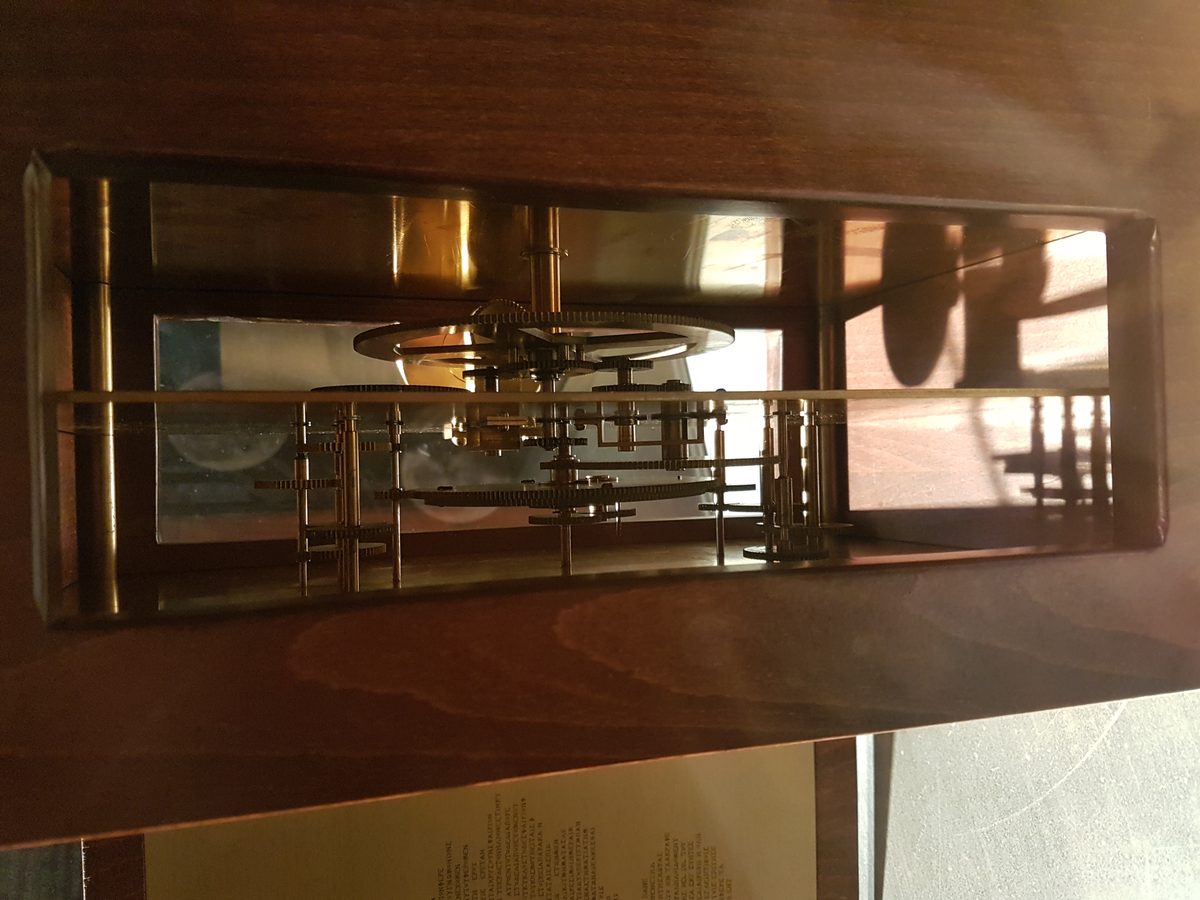
The Antikythera Mechanism is an ancient Greek astronomical calculator — often called the world's first analog computer — built from bronze gears more than 2,000 years ago 1. Discovered in 1901 in a shipwreck off the Greek island of Antikythera, it used a complex system of at least 30 interlocking gears to predict the positions of the Sun, Moon, and five known planets, forecast eclipses, and even track the dates of the ancient Olympic Games 2. Its precision engineering would not be matched in Europe for over a thousand years, until the mechanical clocks of the medieval era 1. Today only about a third of the device survives, split into 82 corroded fragments that researchers are still decoding 2.
What Is the Antikythera Mechanism?
The Antikythera Mechanism is a hand-powered astronomical device of bronze gears that mechanized the astronomical knowledge of the ancient Greek world 2. By turning a crank, a user could calculate and display celestial phenomena — the motions of the Sun and Moon, the phases of the Moon, the positions of the planets, and upcoming eclipses 1. Widely regarded as the most technologically advanced instrument known from antiquity, it effectively packed most of what the Greeks knew about astronomy into a single geared machine 1. Historians describe it as a genuine analog computer, centuries ahead of anything else known to exist 2.
How Was It Discovered?
The mechanism came to light by accident 1. Around 1900, sponge divers sheltering from a storm near the island of Antikythera discovered an ancient Roman-era shipwreck laden with statues, coins, and other treasures 1. The Greek government organized an underwater excavation in 1900 and 1901 — one of the first major underwater archaeological digs in history 2. Among the recovered objects was an unremarkable lump of corroded bronze that initially escaped notice amid the more spectacular finds 2. In 1902, the Greek archaeologist Valerios Stais spotted a gear wheel and Greek inscriptions embedded in the corrosion, identifying it as something extraordinary 1.
How Old Is the Antikythera Mechanism?
The device is at least as old as the ship that carried it 2. The wreck has been dated to roughly 60 to 70 BCE, but some evidence suggests the mechanism itself may have been built earlier, possibly around 100 to 200 BCE 2. That places its construction more than 2,000 years ago, during the Hellenistic period — an era of remarkable scientific progress in the Greek world 1. Its very existence forced historians to revise their assumptions, since gears of such sophistication were previously thought impossible for that time 2.
What Could the Antikythera Mechanism Do?
The mechanism was a multi-function astronomical calculator 1. Its bronze gears charted the movements of the Sun, Moon, and the five planets known in antiquity, and displayed them as a working model of the ancient Greek cosmos 2. It predicted solar and lunar eclipses, tracked the Moon's phases, and even showed the four-year cycle of athletic games including the Olympics 1. Inscriptions hidden inside the fragments describe these functions in detail — thousands of tiny Greek characters that went unread for over 2,000 years until modern imaging revealed them 2.
How Are Scientists Still Studying It?
Because the mechanism is broken and corroded, understanding it has been a decades-long puzzle 2. A major breakthrough came from the British physicist and historian Derek de Solla Price, who in 1974 published "Gears from the Greeks," the first work to establish it as a sophisticated calculating machine 1. In 2005, microfocus X-ray computed tomography allowed researchers to peer inside the fragments, decoding much of the internal gearing and revealing previously buried inscriptions 2. Modern research teams have since combined this imaging with knowledge of Babylonian astronomy and Greek mathematics to build detailed reconstructions 2. Even so, some aspects of its design remain unresolved 1.
Why Does the Antikythera Mechanism Matter?
The mechanism reshaped our understanding of ancient technology 1. It proves that Greek engineers achieved a level of mechanical precision and astronomical modeling long thought to be beyond the ancient world 2. It also blends multiple traditions — Babylonian astronomical cycles, Greek geometry, and Hellenistic astronomy — into one instrument, revealing how interconnected ancient science truly was 2. Perhaps most striking is the gap it exposes: nothing of comparable complexity is known for more than a millennium afterward, making the Antikythera Mechanism one of history's most remarkable and well-documented mysteries 1.
Frequently Asked Questions
What is the Antikythera Mechanism? An ancient Greek bronze-geared device that calculated astronomical positions and events — often called the first analog computer 2.
When was it discovered? In 1901, by sponge divers exploring a shipwreck off the Greek island of Antikythera 1.
How old is it? At least 2,000 years old; the shipwreck dates to about 60-70 BCE, and the device may be older 2.
What could it do? It tracked the Sun, Moon, and planets, predicted eclipses, and displayed the dates of the Olympic Games 1.
Where is the Antikythera Mechanism now? Its surviving fragments are held at the National Archaeological Museum in Athens 1.