Creatine for the Brain: Does It Actually Boost Cognition?
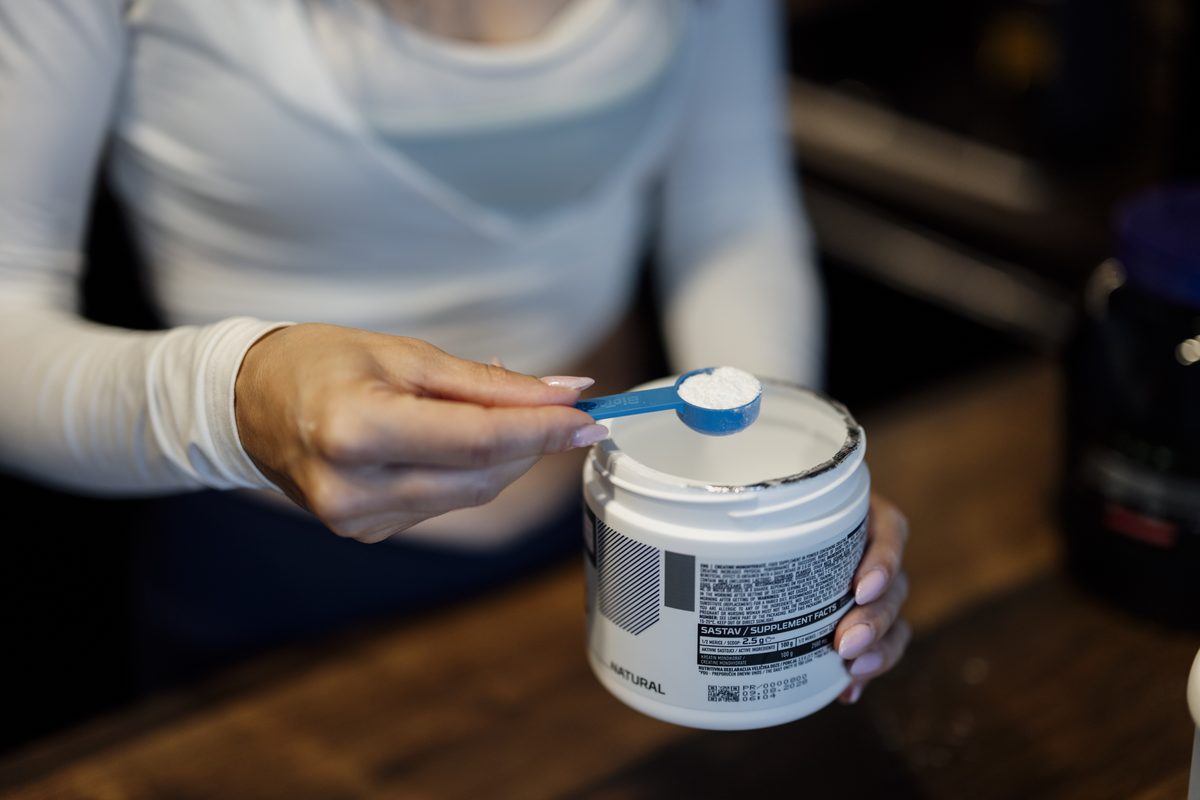
Creatine, long a favorite of gym-goers, has been rebranded as a brain supplement, with claims it sharpens memory, focus, and mood 3. This one has more science behind it than most viral supplements: creatine is one of the best-supported compounds for muscle, and a 2024 meta-analysis found it may genuinely benefit memory, attention, and processing speed 1. But the cognitive effects are modest and depend heavily on who you are, and it is no "smart pill" 3. Here is a fair, evidence-based look.
What Is Creatine?
Creatine is a compound your body makes naturally and stores in both muscle and the brain, where it helps rapidly regenerate ATP, the molecule that powers cells during intense activity 3. The most studied form is creatine monohydrate, which is cheap, safe, and has been used by athletes for over 30 years 1. In muscle, it reliably improves strength, power, and sprint performance, with slight water-weight gain being the only consistent side effect 1. Because the brain is also a highly energy-demanding organ that stores creatine, researchers began asking whether supplementing could support cognition too 2.
What the Brain Evidence Shows
The cognitive research is real and growing, though still maturing 2. A 2024 systematic review and meta-analysis of randomized trials concluded that creatine monohydrate may benefit cognitive function in adults, particularly memory, attention, and information processing speed, with moderate certainty for memory 1. The proposed mechanism is that creatine boosts the brain's cellular energy reserves and reduces oxidative stress, which matters most during demanding mental tasks 1. Scientists are also exploring possible roles in depression, Parkinson's disease, and menopause-related brain fog 3. It is a promising area, but researchers are clear it is not a magic bullet 3.
Who Benefits Most
A crucial nuance is that the benefits are not the same for everyone 3. Creatine's cognitive effects appear strongest in people with lower baseline brain creatine, such as older adults, vegetarians and vegans, and people under acute stress like sleep deprivation 2. In well-rested young people who already eat meat, the effects tend to be smaller and less consistent 2. A 2026 review of older adults found limited evidence that creatine may help cognition in that group, while emphasizing that larger, high-quality trials are still needed 4. In other words, creatine is most likely to help when your brain's energy system is under strain 2.
The Alzheimer's Signal
One of the most striking recent findings comes from a small pilot study 5. Researchers at the University of Kansas Medical Center gave 19 participants with Alzheimer's disease a high dose of 20 grams of creatine daily for eight weeks 5. The supplementation was well tolerated and produced an 11 percent increase in brain creatine levels, along with moderate improvements in working memory and executive function 5. This was the first study of its kind and was designed mainly to test safety and feasibility, so the results are preliminary rather than proof 5. Still, it adds to the case that brain creatine can be raised and may support cognition 5.
The Caveats
Some honest limitations temper the excitement 2. The optimal dose and protocol to actually raise brain creatine remains unknown, and it is more complex than the muscle picture, because creatine reaches muscle first and higher doses may be needed to affect the brain 2. The standard muscle dose is around 5 grams a day, while the Alzheimer's study used 20 grams to reach the brain 5. Many cognitive findings are also modest and come from small studies, so larger trials are needed to confirm how meaningful the effects are in everyday life 1. The reassuring flip side is that creatine is remarkably safe and inexpensive, which lowers the stakes of trying it 1.
The Fair Bottom Line
Creatine for the brain is that rare trend where the science is genuinely supportive, if not yet conclusive 1. It is one of the safest, best-studied supplements available, and evidence suggests real, if modest, cognitive benefits, especially for older adults, vegetarians, and the sleep-deprived 3. Just do not expect a dramatic intelligence boost, and talk to a doctor before starting, particularly at higher doses — this is general information, not medical advice 2.
Related fact-checks on this site: [Castor Oil Packs Liver Detox](https://innumbra.com/post/castor-oil-packs-liver-detox-fact-check) and [Vagus Nerve Reset Oil Devices](https://innumbra.com/post/vagus-nerve-reset-oil-devices-fact-check).
Frequently Asked Questions
Does creatine improve brain function? A 2024 meta-analysis found it may benefit memory, attention, and processing speed, with the strongest effects in certain groups 1.
Who benefits most from creatine for cognition? Older adults, vegetarians, and people under stress like sleep deprivation, who tend to have lower baseline brain creatine 2.
Is creatine safe? Yes. It is one of the most studied supplements, well tolerated over decades, with minor water-weight gain the main side effect 1.
How much creatine is needed for the brain? This is still unclear; muscle studies use about 5 grams daily, while a brain study used 20 grams 5.
Is creatine a "smart pill"? No. The cognitive benefits are real but modest and context-dependent, not a dramatic intelligence boost 3.
References
- https://pubmed.ncbi.nlm.nih.gov/39070254/
- https://www.ncbi.nlm.nih.gov/pmc/articles/PMC7916590/
- https://www.sciencedaily.com/releases/2026/05/260504023828.htm
- https://academic.oup.com/nutritionreviews/advance-article/doi/10.1093/nutrit/nuaf135/8253584
- https://www.kumc.edu/about/news/news-archive/creatine-alzheimers-research.html