Neuromyths: 3 Popular Brain 'Facts' That Are Actually False
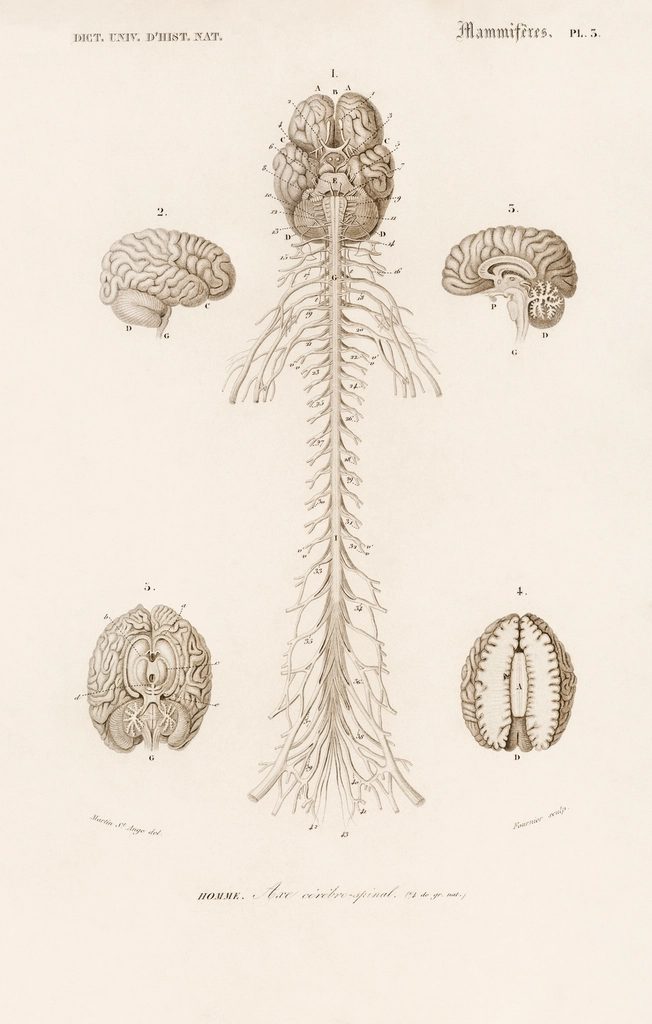
Some of the most widely believed facts about the brain are simply wrong. Researchers call these "neuromyths," and studies show they are strikingly common: one survey found the general public believed 68 percent of common brain myths, educators endorsed 56 percent, and even people with neuroscience training accepted 46 percent 1. Three of the most popular — that you only use 10 percent of your brain, that you are "left-brained" or "right-brained," and that people learn best in their preferred "learning style" — have all been debunked by neuroscience 1. Here is a fair, evidence-based look.
What Are Neuromyths?
Neuromyths are false beliefs about the brain, a term first coined in an international education report 1. They typically arise when real scientific findings get oversimplified or overextended into misinformation, especially in education 1. Once these ideas take hold in popular culture, they are surprisingly hard to dislodge, even among well-informed people 1. The good news is that exposure to neuroscience reduces belief in them, though it does not eliminate it entirely 1. Below are three of the most persistent, along with what the science actually says 1.
Myth 1: You Only Use 10 Percent of Your Brain
This is false — you use virtually all of your brain 3. Modern imaging techniques like PET and functional MRI have found no permanently inactive areas in a healthy brain, and scientists confirm we use most of our brain most of the time, even during sleep 3. Different regions are active for different tasks, but over the course of a day essentially all of it is engaged 4. The idea is also biologically implausible, since the brain consumes a large share of the body's energy and it would make no evolutionary sense to carry mostly idle tissue 3. The myth likely grew from misread early brain research and a misquoted line about untapped human potential 3.
Myth 2: Left-Brained vs. Right-Brained People
The idea that you are either a logical "left-brained" person or a creative "right-brained" one is not supported by evidence 3. It is true that the hemispheres have some specializations — the left is heavily involved in language and speech, the right in tasks like facial recognition and spatial attention — but people do not preferentially run on one side 3. A large brain-imaging study analyzing the connectivity of around a thousand brains found no evidence that individuals have a dominant hemisphere; both sides work together roughly equally 4. As one Harvard researcher bluntly put it, the notion is nonsense unless you have had half your brain removed 4. The myth stems from an overextension of Nobel Prize-winning "split-brain" research on patients whose hemispheres were surgically disconnected 4.
Myth 3: Learning Styles
The belief that students learn better when taught in their preferred style — visual, auditory, or hands-on — is one of the most popular neuromyths, and also false 5. It feels intuitive and appeals to educators, but there is no scientific evidence that matching instruction to a student's stated learning style improves learning 5. People may have preferences, but studies consistently fail to show that teaching to those preferences boosts outcomes; what matters more is matching the method to the material 5. Despite being repeatedly debunked, the belief remains common among teachers worldwide and has shown no clear decline over time 5. It gained traction through the 1900s and simply stuck 5.
What Is Actually True About the Brain
The reality is arguably more impressive than the myths 4. Rather than being fixed and static, the brain is remarkably plastic — a property called neuroplasticity — meaning it grows, changes, and adapts throughout your entire life 4. It also operates as an integrated whole, with regions constantly communicating rather than one "side" or a small fraction doing the work 4. Understanding this matters, because neuromyths can misdirect teaching and self-improvement efforts toward strategies that do not work 1. Replacing the myths with accurate neuroscience leads to better decisions 1.
The Fair Bottom Line
Three of the most beloved "brain facts" are neuromyths: you use all of your brain, not 10 percent; you are not left-brained or right-brained, since both hemispheres work together; and learning styles do not actually improve learning 1. These ideas persist because they are simple, intuitive, and often rooted in real science that got stretched too far 1. What endures is the genuinely remarkable truth that your brain is a plastic, fully engaged, integrated organ — and that is the version worth believing 4.
Related fact-checks on this site: [Manifesting 369 Method](https://innumbra.com/post/manifesting-369-method-fact-check) and [Dopamine Detox](https://innumbra.com/post/dopamine-detox-fact-check).
Frequently Asked Questions
Do we only use 10 percent of our brain? No. Brain imaging shows no inactive areas, and we use essentially all of our brain, even during sleep 3.
Are people really left-brained or right-brained? No. The hemispheres have minor specializations, but everyone uses both sides together, with no dominant one 4.
Do learning styles work? No. There is no evidence that teaching to a preferred learning style improves learning outcomes 5.
Why do so many people believe neuromyths? They are intuitive and often stem from real research that was oversimplified, making them sticky and hard to correct 1.
What is neuroplasticity? It is the brain's ability to grow, change, and adapt throughout life, which is one of neuroscience's best-supported findings 4.
References
- https://www.ncbi.nlm.nih.gov/pmc/articles/PMC5554523/
- https://www.psychologytoday.com/us/blog/the-athletes-way/201708/debunking-neuromyths-eight-common-brain-myths-set-straight
- https://www.aasa.org/resources/resource/debunking-education's-neuromyths
- https://www.edutopia.org/neuroscience-brain-based-learning-myth-busting
- https://www.brainpost.co/weekly-brainpost/2023/9/12/myths-and-facts-left-brain-right-brain-function-learning-styles-and-sensory-processing