Ancient Machining? A Fact-Check
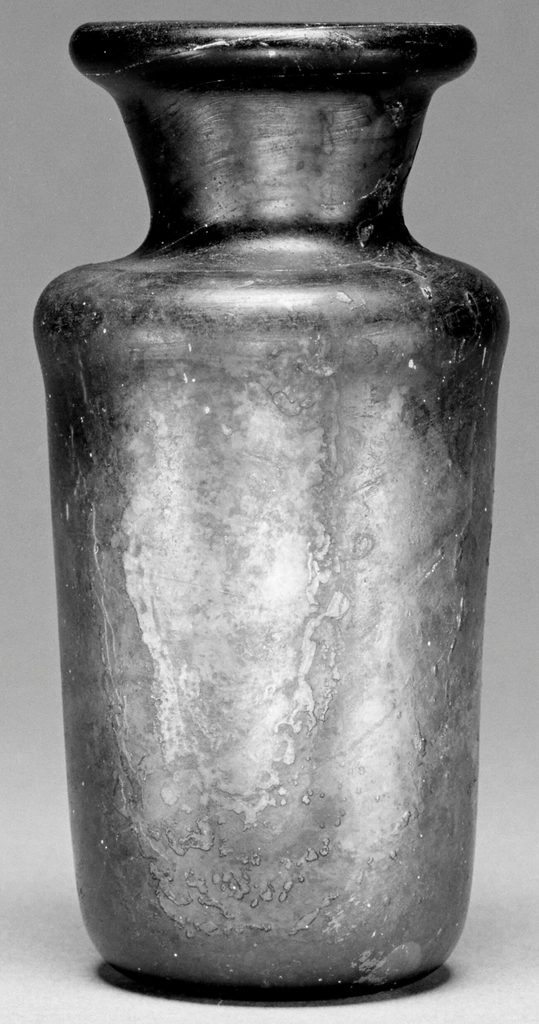
Ben van Kerkwyk is the independent researcher behind the popular YouTube channel UnchartedX, who argues that ancient Egyptian granite vases are so precise they must have been made with lost machine technology — an idea often called "ancient machining" 1. Using aerospace-grade 3D scanning, his "Vase Scan Project" reports one vase with under 0.4 microns of difference between its axes, roughly 1/100th the width of a human hair 2. The artifacts are genuinely remarkable, but the conclusion does not follow: no such machines have ever been found, experimental archaeology shows the precision is achievable by hand, and the "super-precise" vases come largely from unprovenanced private collections 34. Here is a fair look. 5
Who Is Ben van Kerkwyk?
Ben van Kerkwyk is an independent researcher with a background in information technology who runs the alternative-history channel UnchartedX 1. His interest in ancient mysteries was sparked by the work of Graham Hancock, and he has since made research trips to Egypt, Peru, and Bolivia 1. He is best known for the Vase Scan Project, in which he and a team of collectors and technicians use precision metrology to analyze ancient Egyptian stone vessels 2. His polished videos and use of modern measurement tools have made him an influential voice in the "lost ancient technology" community 1.
What Does He Claim?
Van Kerkwyk argues that certain Egyptian vases carved from granite and diorite show a level of precision that hands and simple tools could not achieve 2. He reports features such as symmetry within 0.4 microns — about 16 millionths of an inch — and mathematical proportions involving pi and phi 2. Tens of thousands of such stone vessels have been recovered from Egypt over the years 2. From this he infers that the objects were designed and manufactured with advanced technology — effectively ancient equivalents of computer-aided design and machine tools 1. Extended to sites like the Serapeum and Abu Rawash, the argument becomes evidence for a lost, technologically advanced civilization 1.
The Missing Machines Problem
The most basic objection is that no machines have ever been found 1. Proponents of ancient high technology have never produced a single lathe, cutting machine, power source, or workshop — only the finished artifacts and an inference about how they "must" have been made 1. Critics note that van Kerkwyk, coming from a technology background, tends to assume the ancients used the same methods he would use today 1. This is an argument from personal incredulity: because a modern engineer would reach for a machine, it is assumed the ancients must have had one, despite the complete absence of physical evidence 1.
What Experimental Archaeology Shows
Crucially, researchers have tested how Egyptians actually worked hard stone 3. The experimental archaeologist Denys Stocks, a trained mechanical engineer, reconstructed over two hundred replica tools and demonstrated the techniques in practice 3. Egyptians shaped and drilled granite using flint tools, copper tubular drills fed with quartz sand as an abrasive, dolerite pounding stones, and bow-driven drills and lathes 1. Modern craftspeople have replicated fine stone vessels by hand using these methods 1. The work is slow — the material-removal rate for granite is roughly 10 times lower than for softer stone like alabaster — but it is demonstrably achievable by skilled artisans with time and experience 3.
The Provenance and Selection Problem
There is also a serious evidence problem with the vases themselves 4. The most "super-precise" examples come overwhelmingly from private collections, not from documented archaeological excavations 4. Collectors historically cherry-picked the most beautiful and precise pieces, while museums hold thousands of ordinary or broken examples 4. This creates a strong selection bias, and it means the chain of custody — and therefore the ancient dating — is often uncertain 4. Critics point out that no securely provenanced predynastic artifact has been shown to have this claimed precision, which undercuts the entire argument 4.
So What's the Verdict?
Ben van Kerkwyk brings genuine rigor to his measurements, and the finest Egyptian vases are extraordinary works that deserve admiration 2. But precision is a testament to human skill, not proof of machines 3. The tools and techniques to produce these objects by hand are documented, the "lost technology" has never been found, and the most impressive examples lack the provenance needed to date them confidently 4. The honest conclusion is that the vases reflect the remarkable craftsmanship of ancient artisans — a more impressive story than an unevidenced lost machine age 3.
Related fact-checks on this site: [Star Forts Lost Technology](https://innumbra.com/post/star-forts-lost-technology-fact-check) and [Worlds In Collision Velikovsky](https://innumbra.com/post/worlds-in-collision-velikovsky-fact-check).
Frequently Asked Questions
Who is Ben van Kerkwyk? An IT-background independent researcher who runs the alternative-history YouTube channel UnchartedX 1.
What is the Vase Scan Project? His effort to 3D-scan ancient Egyptian stone vases and measure their precision 2.
Does the precision prove ancient machines? No. No machines have been found, and experimental archaeology shows hand methods can achieve high precision 3.
How did Egyptians work granite? With flint tools, copper tube drills and quartz sand abrasive, dolerite pounders, and bow drills, as Denys Stocks demonstrated 3.
Why is provenance an issue? The most precise vases come from private collections with uncertain chain of custody, undermining their dating 4.
References
- https://www.metabunk.org/threads/claim-ancient-egyptians-could-not-work-granite-without-high-tech-diamond-tools.12963/
- https://unchartedx.com/site/
- https://doi.org/10.4324/9781003269922
- https://veronicasart.com/egyptian-stone-vases-high-precision-or-complete-delusion-research-proves-one-thing/
- https://en.wikipedia.org/wiki/Pseudoarchaeology