Forbidden Archeology: A Fact-Check
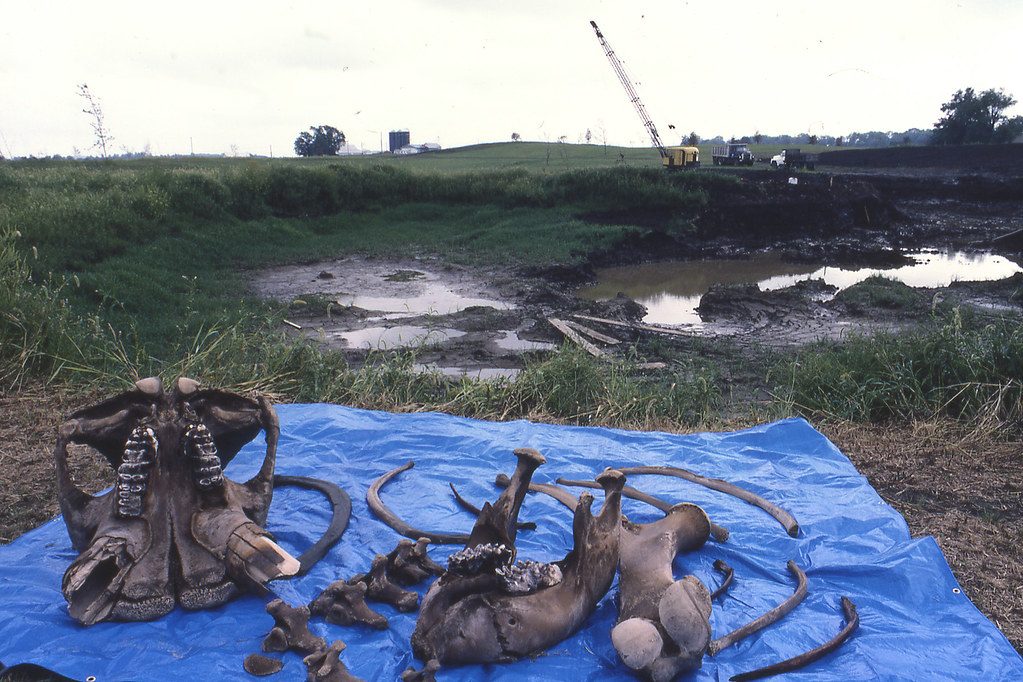
Michael Cremo is the author of Forbidden Archeology, a 1993 book arguing that anatomically modern humans have existed for tens of millions of years — coexisting with apes rather than evolving from earlier hominins 1. He claims the scientific establishment operates a "knowledge filter" that suppresses evidence contradicting Darwinian evolution 1. But Forbidden Archeology is widely classified as pseudoarchaeology, and it is best understood as a form of Hindu creationism rooted in Cremo's religious beliefs 12. The anomalous evidence it relies on consists largely of old, poorly documented reports that do not withstand modern scrutiny 2. Here is a fair look at the claim.
What Is Forbidden Archeology?
Forbidden Archeology: The Hidden History of the Human Race is a 914-page book published in 1993 by Michael Cremo and mathematician Richard Thompson 1. Its central thesis is that modern humans did not evolve from ape-like ancestors but have coexisted with apes for millions of years 1. To support this, the book compiles a vast catalog of "anomalous" archaeological finds — bones, artifacts, and marks said to appear in extremely old geological strata 1. Cremo argues that mainstream science has suppressed, ignored, or forgotten this evidence because it contradicts accepted views of human evolution 1.
Who Is Michael Cremo?
Michael Cremo, also known by his devotional name Drutakarma Dasa, is a longtime member of the Hare Krishna movement and the Bhaktivedanta Institute, a branch of ISKCON 1. He has no formal training in archaeology and describes himself instead as a "Vedic archeologist" 1. His interest grew from the sacred texts of his faith — the Vedas and Puranas — which describe humans existing for immense spans of time 2. He openly frames his work as an effort to show that the scientific record is consistent with these ancient Indian accounts of human antiquity 2.
What Is the "Knowledge Filter"?
The "knowledge filter" is Cremo's key idea for explaining why mainstream science rejects his evidence 1. He argues that scientists apply stricter standards to findings that contradict the evolutionary paradigm than to findings that support it, so inconvenient data gradually "disappears" 1. Importantly, Cremo does not claim a deliberate conspiracy; he describes it as an ongoing social process of knowledge filtration 1. Critics point out that this is essentially a restatement of confirmation bias, and that it inverts a basic principle: extraordinary claims are held to higher standards because they require stronger evidence, not because of ideological suppression 1.
Why Do Scientists Reject the Claims?
The scientific consensus is that anatomically modern humans emerged a few hundred thousand years ago, supported by a deep and consistent fossil, genetic, and stratigraphic record 1. Cremo's anomalies, by contrast, come overwhelmingly from nineteenth and early twentieth century reports that predate modern excavation and dating methods 2. On examination, these cases dissolve into misidentified objects, imprecise or disturbed stratigraphy, natural formations mistaken for artifacts, and dating errors 2. There is no credible, well-documented evidence of modern human remains in strata millions of years old 1. The genetic evidence for recent human origins is especially difficult to reconcile with Cremo's thesis 1.
Is It Fair to Call It Creationism?
Yes, and it is worth being precise 2. Just as Christian young-earth creationists interpret science to fit the Bible, Cremo and Thompson interpret the archaeological record to fit their Vedic scriptures — making them, as reviewers have noted, essentially Hindu creationists 2. To his credit, Cremo cites his sources meticulously and has visited many sites in person, so the criticism is not that his referencing is sloppy 1. The problem is interpretive: he elevates discredited historical anomalies to overturn a paradigm supported by vastly stronger modern evidence 2. One historian of science noted the book is a useful compendium for studying how archaeology handles anomalies, without endorsing its conclusions 1.
So What's the Verdict?
Forbidden Archeology is an unusually thorough work built on a foundation that mainstream science rejects 1. Its central claim — that modern humans are tens of millions of years old — is contradicted by essentially the entire body of paleoanthropological and genetic evidence 1. The "knowledge filter" is a compelling-sounding idea that mainly reframes the ordinary scientific practice of scrutinizing extraordinary claims 1. Understood honestly, the book is a religiously motivated challenge to evolution rather than a genuine archaeological discovery 2.
Related fact-checks on this site: [Star Forts Lost Technology](https://innumbra.com/post/star-forts-lost-technology-fact-check) and [Worlds In Collision Velikovsky](https://innumbra.com/post/worlds-in-collision-velikovsky-fact-check).
Frequently Asked Questions
What is Forbidden Archeology? A 1993 book by Michael Cremo arguing that modern humans have existed for tens of millions of years 1.
Who is Michael Cremo? A Hare Krishna devotee and self-described "Vedic archeologist" with no formal archaeology training 1.
What is the "knowledge filter"? Cremo's claim that science suppresses evidence contradicting evolution; critics call it confirmation bias 1.
Is the claim accepted by scientists? No. Fossil and genetic evidence shows modern humans emerged a few hundred thousand years ago 1.
Is Forbidden Archeology creationism? Effectively yes — it interprets evidence to fit Vedic scripture, a form of Hindu creationism 2.