'Ancient Aliens' and Giorgio Tsoukalos: A Fact-Check
Giorgio A. Tsoukalos is the writer and producer who has been the public face of the History Channel's Ancient Aliens since 2009, promoting the idea that extraterrestrials shaped ancient human civilization 1. Across more than 200 episodes, he has become instantly recognizable — and the subject of the famous "I'm not saying it was aliens… but…" internet meme 1. Despite his popularity, historians, archaeologists, and scientists are united that there is no evidence for ancient alien visitation, and the show is widely classified as pseudoscience and pseudoarchaeology 2. Here is a fair look at the claims and the record.
Who Is Giorgio Tsoukalos?
Giorgio A. Tsoukalos, born in Switzerland in 1978, is a writer, television presenter, and producer, and a promoter of the ancient astronaut hypothesis 1. He became a regular on Ancient Aliens when it premiered in 2009 and later became a co-executive producer, appearing in hundreds of episodes 13. He also publishes Legendary Times, a magazine devoted to ancient astronaut research, and has long been associated with a society founded by Erich von Däniken 1. Tsoukalos has said his interest was sparked in childhood when his grandmother introduced him to von Däniken's Chariots of the Gods? 1.
What Are His Credentials?
Tsoukalos is a 1998 graduate of Ithaca College with a bachelor's degree in communications, not archaeology 1. He has said he deliberately chose not to pursue an archaeology degree, describing himself instead as a "renegade archaeologist" whose ideas do not fit within mainstream anthropology 1. Before entering ancient astronaut research, he worked for years in the bodybuilding industry, promoting professional competitions 1. This background matters because his public authority rests on television presence and self-description rather than on training or peer-reviewed work in the fields he discusses 2.
What Does Tsoukalos Claim?
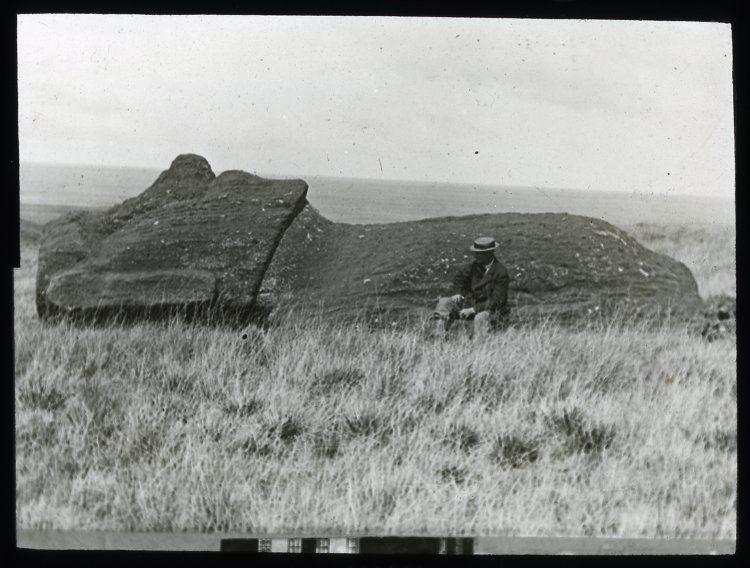
On Ancient Aliens, Tsoukalos advances the theory that extraterrestrials visited Earth in the distant past and influenced human religion, technology, and monument-building 2. The show applies this single lens to a huge range of subjects — from Egyptian and Mesoamerican pyramids to Easter Island statues and Puma Punku — suggesting that ancient people misinterpreted advanced alien technology as gods 2. Tsoukalos frames much of this as questions the establishment supposedly refuses to ask 1. The recurring implication is that humans could not have achieved these works without outside help 2.
Why Do Experts Reject Ancient Aliens?
The core problem is the complete absence of physical evidence for alien contact 2. Archaeologists, historians, and cosmologists point out that the monuments Ancient Aliens highlights all have well-documented human explanations grounded in the archaeological record 2. Critics also note the show's rhetorical method: it relies heavily on leading questions — "could this have been aliens?" — that present speculation as though it were evidence, without ever meeting the burden of proof 1. This "just asking questions" style lets extraordinary claims float free of the scrutiny that real evidence would require 2.
The "I'm Not Saying It Was Aliens" Meme
Tsoukalos's on-screen presence, including his distinctive hairstyle and emphatic delivery, inspired a widely shared meme captioned "I'm not saying it was aliens… but…" 1. Variations began circulating as early as November 2010 1. According to Dictionary.com, the meme mimicked the tone of conviction Tsoukalos uses to present far-fetched pseudo-logic as fact 1. Tsoukalos himself has embraced the meme, calling it an honor to have been adopted by internet users 1. The joke endures precisely because it captures the show's signature move: confident insinuation in place of demonstration 2.
Why Does the Show's Popularity Matter?
Ancient Aliens has run for more than a dozen seasons and reaches a large audience, which is exactly why scholars take it seriously as a problem 2. Beyond individual false claims, critics argue that the ancient astronaut narrative repeats a troubling pattern of denying non-European cultures credit for their own achievements 2. Some organizations have gone further, describing the genre as promoting racist pseudo-scholarship 2. Understanding Tsoukalos's work means appreciating its entertainment appeal while recognizing that popularity is not proof — and that the evidence for ancient aliens simply does not exist 2.
Related fact-checks on this site: [Forbidden Archeology](/post/forbidden-archeology-cremo-fact-check) and [David Hatcher Childress](/post/david-hatcher-childress-fact-check).
Frequently Asked Questions
Who is Giorgio Tsoukalos? A Swiss-born writer and producer who is the face of the History Channel's Ancient Aliens and a leading promoter of ancient astronaut theory 1.
Is Giorgio Tsoukalos an archaeologist? No. His degree is in communications, and he has said he intentionally did not pursue archaeology 1.
What is the "I'm not saying it was aliens" meme? A popular internet meme based on Tsoukalos's confident delivery on Ancient Aliens 1.
Is there evidence for ancient aliens? No. Scientists and historians agree there is no evidence, and the theory is classified as pseudoscience 2.
Why do experts criticize Ancient Aliens? Because it presents speculation as fact and denies ancient cultures credit for their own achievements 2.