The Kensington Runestone: A Fact-Check
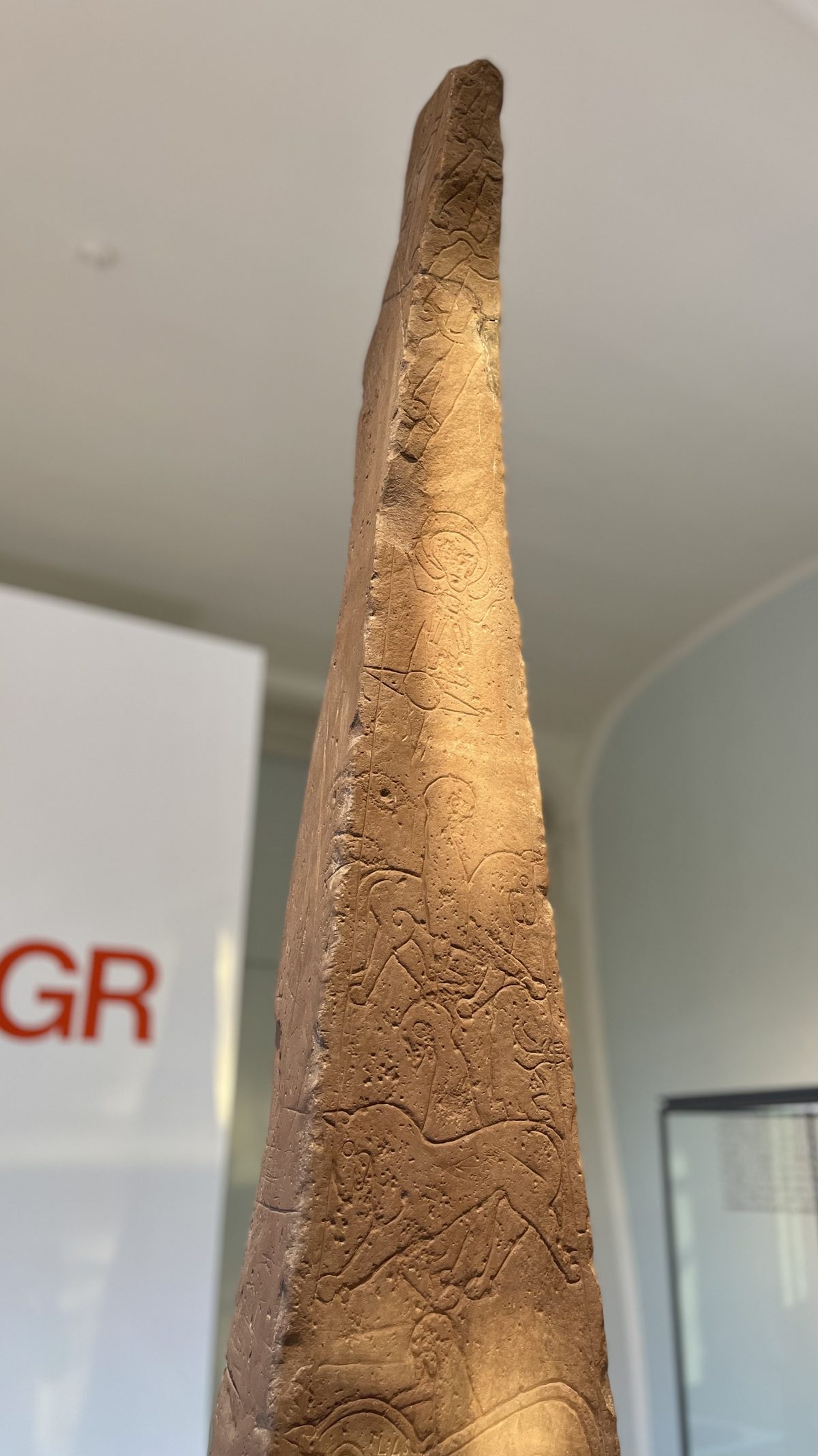
Scott Wolter is the geologist and America Unearthed host who argues that the Kensington Runestone — a carved slab found in Minnesota in 1898 — is an authentic 14th-century artifact left by the Knights Templar as a secret land claim 1. It is a colorful theory involving Templars, the Holy Grail, and a Freemasonic cipher 2. But runologists, linguists, and historians overwhelmingly regard the Kensington Runestone as a modern forgery, most likely made in the late 1800s, and Wolter's Templar and Masonic connections are riddled with anachronisms 13. Here is a fair look at the claim and the evidence.
What Is the Kensington Runestone?
The Kensington Runestone is a roughly 200-pound greywacke slab unearthed in 1898 by Swedish immigrant farmer Olof Öhman while clearing trees on his land near Kensington, Minnesota 1. It bears a runic inscription that its carver dated to 1362, describing a party of Norse explorers 1. If genuine, it would mean Scandinavians reached the interior of North America well over a century before Columbus 1. Since its discovery, the stone has been the subject of intense controversy over whether it is a medieval artifact or a modern creation 1.
Who Is Scott Wolter?
Scott Wolter is a geologist who runs a petrographic company and became known for forensic work such as dating concrete in criminal cases 1. He hosted the History Channel and H2 series America Unearthed, which premiered in 2012 and explored artifacts said to show pre-Columbian European contact 1. Wolter is a geologist by trade, but he is not a trained archaeologist, linguist, or runologist, and some of his stated credentials have been questioned by critics 2. He is also a Freemason, which critics note shapes his interpretation of the runestone 2.
What Does Wolter Claim?
Wolter argues that the Kensington Runestone is authentically medieval and was carved in 1362 by the Cistercians or Knights Templar as a land claim 1. Central to his case is a symbol he calls the "Hooked X," which he interprets as a hidden marker linking the stone to the Templars and later Freemasonry 2. He has gone further, suggesting the inscription contains a Masonic cipher and that the stone represents an early foundation of the United States 2. To support an old date, he developed a method he calls archaeopetrography, claiming the weathering of the carvings proves 14th-century age 1.
Why Do Experts Say It's a Forgery?
The strongest evidence against authenticity is linguistic 1. The runes and language on the stone contain letter forms, spellings, and grammatical features characteristic of 19th-century Swedish rather than genuine medieval Norse of 1362 1. This points strongly to a creation around the time of its discovery, not the Middle Ages 1. There is also no corroborating archaeological evidence of a 14th-century Norse expedition deep into Minnesota 3. For these reasons, the scholarly consensus has long treated the Kensington Runestone as a hoax, however durable its popular appeal 2.
The Anachronism Problem
Wolter's Templar and Masonic framework runs into basic chronology 2. Freemasonry as an organized institution did not exist until centuries after 1362, so a "Freemasonic cipher" carved in the 14th century is impossible 2. Similar timeline problems affect other elements of his narrative, which weave together groups and symbols that did not overlap in the way he proposes 2. Critics also note that his supporting geological dating is not accepted by mainstream geologists, and that his television series notably did not feature other geologists offering alternative interpretations of his findings 1.
So What's the Verdict?
Scott Wolter's real forensic-geology background gives his presentations a veneer of scientific authority, which is part of why the theory persists 1. But expertise in dating concrete does not translate into authority over medieval runes, and the specialists who study those runes are nearly unanimous 1. The linguistic evidence points to a modern forgery, the archaeological support is absent, and the Templar-Masonic story is chronologically impossible 2. The honest conclusion is that the Kensington Runestone is best understood as a fascinating late-19th-century hoax, not a medieval Templar document 2.
Related fact-checks on this site: [Star Forts Lost Technology](https://innumbra.com/post/star-forts-lost-technology-fact-check) and [Worlds In Collision Velikovsky](https://innumbra.com/post/worlds-in-collision-velikovsky-fact-check).
Frequently Asked Questions
What is the Kensington Runestone? A carved stone found in Minnesota in 1898, inscribed with a date of 1362 and a Norse message 1.
Who promotes it as authentic? Geologist and America Unearthed host Scott Wolter, who ties it to the Knights Templar 1.
Is the Kensington Runestone real? Most runologists and historians consider it a modern forgery, likely made in the late 1800s 1.
What is the "Hooked X"? A symbol Wolter interprets as a Templar and Masonic marker, an interpretation experts reject 2.
Why is the Templar theory doubted? It relies on anachronisms, such as a Masonic cipher centuries before Freemasonry existed 2.