The 'Mud Flood' Theory: A Fact-Check
The "mud flood" theory is an internet conspiracy claim that a catastrophic global deluge of mud buried the world's cities in the 18th or 19th century, wiping out an advanced lost empire called "Tartaria" that elites then erased from history 1. It exploded online after about 2016, powered by TikTok and YouTube, and points to ordinary details — like basement windows partly below ground — as proof of a hidden cataclysm 2. But historians and geologists reject it completely: Tartary was just a vague old map label, "buried" ground floors are the result of normal urban development, and there is no geological evidence of any global mud flood 13. Here is a fair look at the claim and the evidence.
What Is the Mud Flood Theory?
The mud flood theory holds that a sudden, world-spanning mud disaster buried entire cities, and that the survivors dug out the upper floors of these buildings and falsely claimed to have built them 1. In this telling, the true builders were "Tartarians" — a technologically advanced global civilization with wonders like free wireless energy — whose existence was deliberately covered up by later governments and elites 1. Proponents argue the evidence is hidden in plain sight, from grand old architecture to "half-buried" windows and doors 2. It is essentially a claim that mainstream history is a vast, coordinated fabrication 3.
What Was "Tartaria" Really?
The starting point of the theory rests on a genuine misunderstanding 2. "Tartary" or "Great Tartary" was a real term — but it was simply a vague European and Russian label for the huge, poorly understood region of Central and North Asia, including Siberia and Mongolia 2. It referred to the lands of the "Tatars" and other nomadic Turco-Mongol peoples, and the word "tartar" itself carried the sense of "barbarian" 2. Popularized by writers such as the Italian Martino Martini in the mid-1600s, the term was a catch-all for unfamiliar territory, and it faded as the region was properly mapped 2. It was never the name of a single, advanced, world-spanning empire 1.
Why Do Old Buildings Look "Buried"?
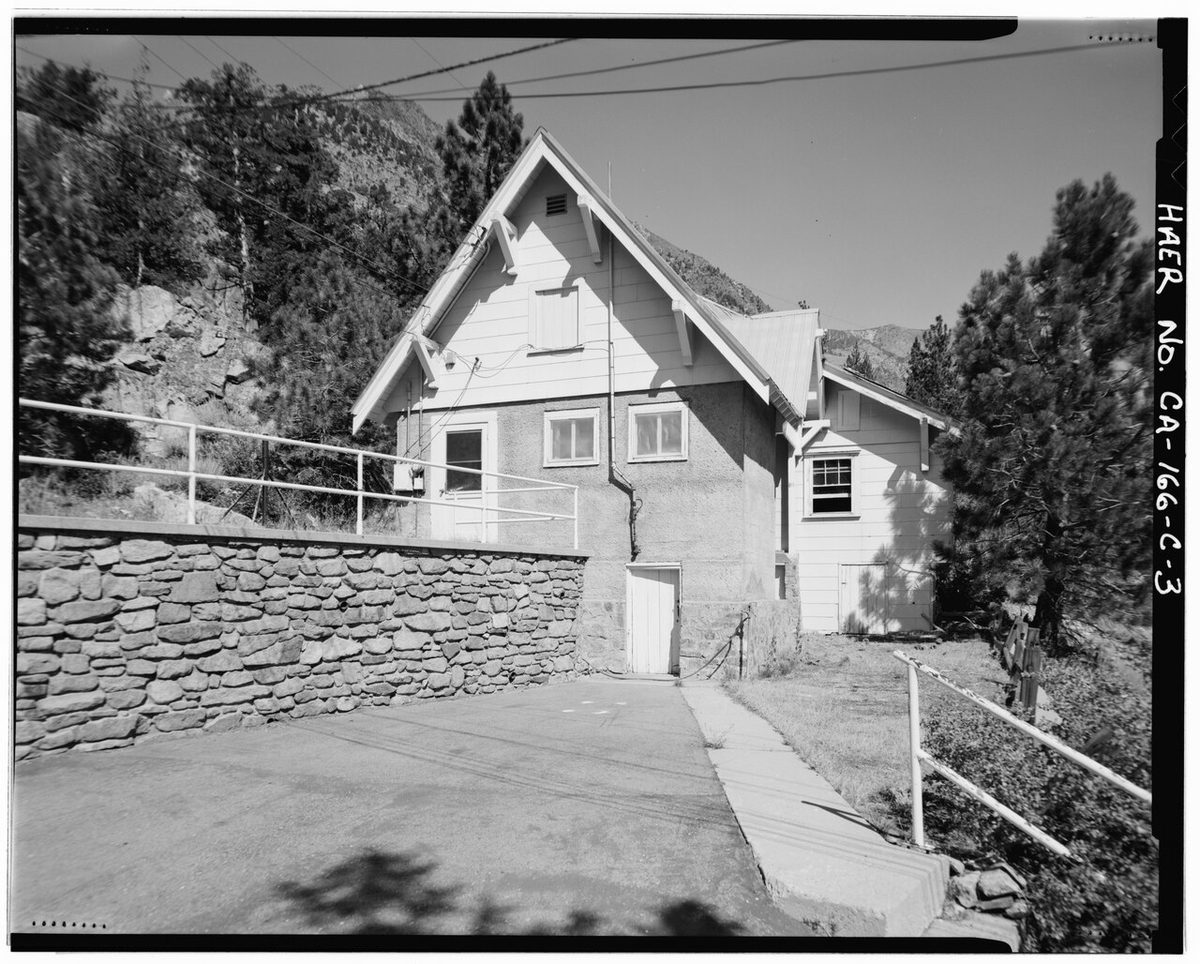
The theory's most persuasive-seeming evidence is buildings with windows and doors below street level, which believers call sunken Tartarian ground floors 1. The real explanation is ordinary urban development 3. Over the nineteenth and twentieth centuries, cities repeatedly raised their street levels to manage flooding, install sewers, and lay new infrastructure — sometimes burying the original lower stories of existing buildings 3. Basement and semi-basement windows were also a deliberate design feature, not evidence of a flood 1. Even the accumulated debris of daily life added up: as one architectural historian noted, in the horse-powered nineteenth century, decades of hooves and manure pounded into the streets contributed to rising ground levels 2.
What About Star Forts and Grand Architecture?
Believers also point to geometric "star forts" and ornate old buildings as Tartarian 2. But star forts are a thoroughly documented form of military architecture, developed across Europe from roughly the 15th to 17th centuries in response to gunpowder cannon 1. Their pointed, angular shape was designed to give defenders overlapping fields of fire and eliminate blind spots, and famous engineers designed them 2. Likewise, the grand Beaux-Arts and neoclassical buildings of the 1800s were designed by named architects with surviving plans, drawings, and construction photographs 1. The spectacular structures of world's fairs were built to be temporary — made of plaster over wood — which is precisely why they were later demolished, not destroyed to hide a lost empire 2.
Is There Any Evidence of a Global Mud Flood?
No — and this is decisive 3. There is no geological or sedimentary record of a worldwide mud deluge in the recent past; such an event would leave an unmistakable global layer, and it does not exist 3. The theory also requires a cover-up of impossible scale: hiding a catastrophe that killed most of humanity and falsifying every record, map, and photograph worldwide, all in perfect coordination 3. Historians note the theory is unfalsifiable in practice — any mainstream source is dismissed as fabricated, and any anomaly is folded into the story 3. That is a hallmark of conspiracy thinking, not evidence 1.
Why Does the Mud Flood Theory Appeal to People?
The theory's popularity says more about the present than the past 1. The architecture critic Zach Mortice has described it as "the QAnon of architecture," reflecting a cultural discontent with modern building styles and a romantic belief that older, ornate architecture must have a grander origin 1. It thrives on image-first social media, where a striking photo of a sunken window travels far faster than careful historical explanation 3. And it taps into a broader distrust of institutions, offering a dramatic hidden story in place of the ordinary, well-documented truth 3. The genuine strangeness of forgotten history does the rest 2.
Related fact-checks on this site: [Star Forts Lost Technology](https://innumbra.com/post/star-forts-lost-technology-fact-check) and [Worlds In Collision Velikovsky](https://innumbra.com/post/worlds-in-collision-velikovsky-fact-check).
Frequently Asked Questions
What is the mud flood theory? A conspiracy claim that a global mud disaster buried cities in the 1800s and erased an advanced lost empire called Tartaria 1.
Was Tartaria a real empire? No. "Tartary" was a vague European map label for Central and North Asia, not a unified advanced civilization 2.
Why are some old windows below ground? Because cities raised street levels for drainage and infrastructure, and semi-basements were built by design 3.
Is there evidence of a global mud flood? No. There is no geological record of any such worldwide event 3.
Why do people believe the mud flood theory? It blends distrust of institutions, nostalgia for old architecture, and viral, image-driven social media 1.