The Orion Correlation Theory: A Fact-Check
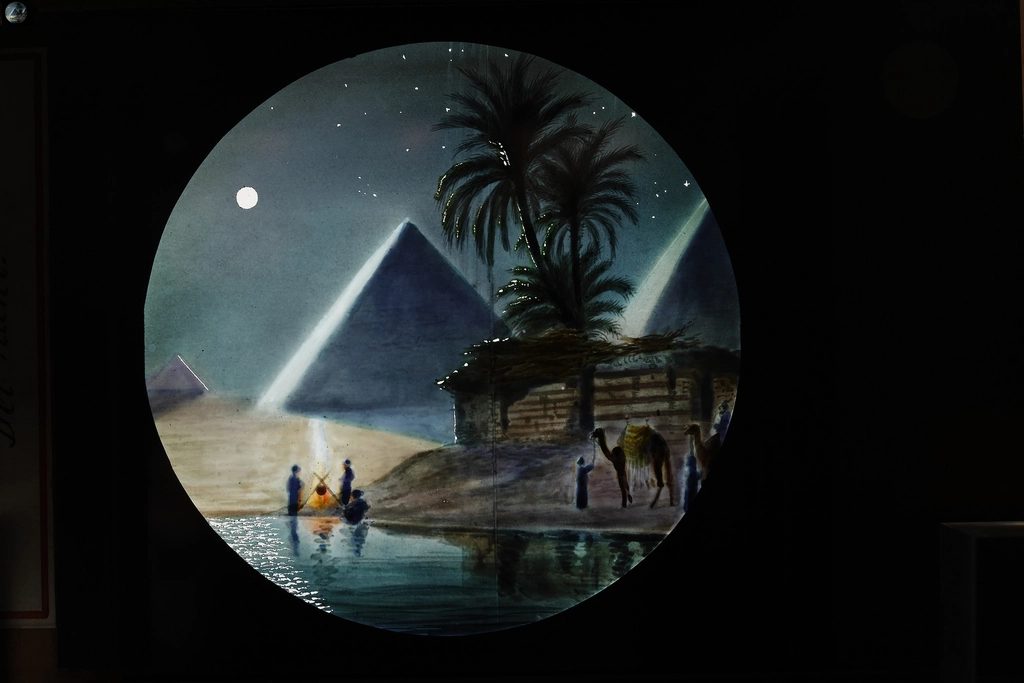
The Orion Correlation Theory is author Robert Bauval's claim that the three great pyramids of Giza were deliberately laid out to mirror the three stars of Orion's Belt 1. First proposed in 1989 and popularized in his 1994 bestseller The Orion Mystery, the idea captured the public imagination — but it is rejected by most Egyptologists and astronomers as pseudoarchaeology 1. When astronomers actually measured the alignment, they found the pyramids form an angle of about 38 degrees, while Orion's Belt sat at roughly 47 to 50 degrees in the era Bauval cited — not the "perfect match" claimed 1. Here is what the evidence shows, and what it does not.
What Is the Orion Correlation Theory?
The Orion Correlation Theory (OCT), also called the Giza-Orion correlation, proposes that the layout of the three main Fourth Dynasty pyramids on the Giza plateau was intentionally designed to match the three stars of Orion's Belt 1. The core observation is that the pyramid of Menkaure sits slightly offset from the line of the Khufu and Khafre pyramids, much as the star Mintaka sits offset from the other two belt stars 1. Bauval argued this resemblance was deliberate — a deliberate encoding of the sky on the ground 1. The theory belongs to a fringe field sometimes called pyramidology 1.
Who Is Robert Bauval?
Robert Bauval is an author best known for developing and popularizing the Orion Correlation Theory 1. The idea reportedly came to him one night in 1983 while camping in the Saudi Arabian desert, when a friend pointed out that Mintaka was offset from the other belt stars 1. He first published the theory in 1989 in the journal Discussions in Egyptology, then expanded it in the 1994 New York Times bestseller The Orion Mystery, co-written with Adrian Gilbert 1. He later collaborated with Graham Hancock, whose own alternative-history work overlaps with Bauval's 1.
What Does the Evidence Actually Show?
The central problem is that the alignment simply is not as precise as claimed 1. Astronomers Ed Krupp of the Griffith Observatory and Anthony Fairall of the University of Cape Town independently measured the geometry 1. They found the three pyramids form a line angled about 38 degrees from north, while Orion's Belt sat at roughly 47 to 50 degrees during the period Bauval referenced — a significant discrepancy rather than a match 1. Modern archaeology therefore treats the OCT as a fringe idea, because there is no physical evidence that any intentional correlation was built into the site 2.
The Inverted-Map Problem
Krupp identified a further, deeper issue 1. The slight bend in the line of the three pyramids deviates toward the north, whereas the "kink" in Orion's Belt deviates toward the south 1. For the two patterns to line up, one of them has to be flipped 1. Critics note that in The Orion Mystery, the comparison images effectively presented the pyramids' map inverted relative to the sky without clearly disclosing that the orientation had been reversed 1. In other words, the striking visual "match" depended on turning the map upside down 1.
The Brightness Versus Size Objection
Another criticism targets Bauval's suggestion that the sizes of the pyramids reflect the brightness of the belt stars 2. In reality, the three stars of Orion's Belt appear almost equally bright to the naked eye 2. That near-equal brightness cannot explain why the pyramid of Menkaure was built at only about one-tenth the volume of the Great Pyramid 2. If the builders were encoding star brightness through pyramid size, the dramatic size difference between the pyramids has no counterpart in the sky 2. The correspondence breaks down on close inspection 2.
Is There Any Truth to the Star Connection?
It is worth being fair about what is genuine 2. Ancient Egyptian religion really did associate the pharaoh's afterlife with the sky, and the constellation Orion was linked to the god Osiris 1. Some astronomers, including Archie Roy and Percy Seymour, have defended aspects of Bauval's visual correlation and disputed the charge of a deliberately inverted map 1. So the debate is not entirely one-sided 1. But a real religious connection between Egyptians and Orion is very different from the specific claim that the pyramids were laid out as a precise ground-map of Orion's Belt — and it is that geometric claim that the evidence does not support 2.
Related fact-checks on this site: [Star Forts Lost Technology](https://innumbra.com/post/star-forts-lost-technology-fact-check) and [Worlds In Collision Velikovsky](https://innumbra.com/post/worlds-in-collision-velikovsky-fact-check).
Frequently Asked Questions
What is the Orion Correlation Theory? The claim that the three Giza pyramids were deliberately arranged to mirror the stars of Orion's Belt 1.
Who created the theory? Author Robert Bauval, who proposed it in 1989 and popularized it in The Orion Mystery (1994) 1.
Why do experts reject it? The pyramids' angle (about 38°) does not match Orion's Belt (about 47-50°), and there is no physical evidence of intentional design 1.
What is the "inverted map" criticism? To make the pyramids match Orion, the map has to be flipped, which critics say was done without disclosure 1.
Did Egyptians connect the pyramids to stars at all? Egyptian religion linked the afterlife and Orion to Osiris, but that is separate from the precise geometric correlation claim 1.