Puma Punku: Alien Technology or Ancient Skill?
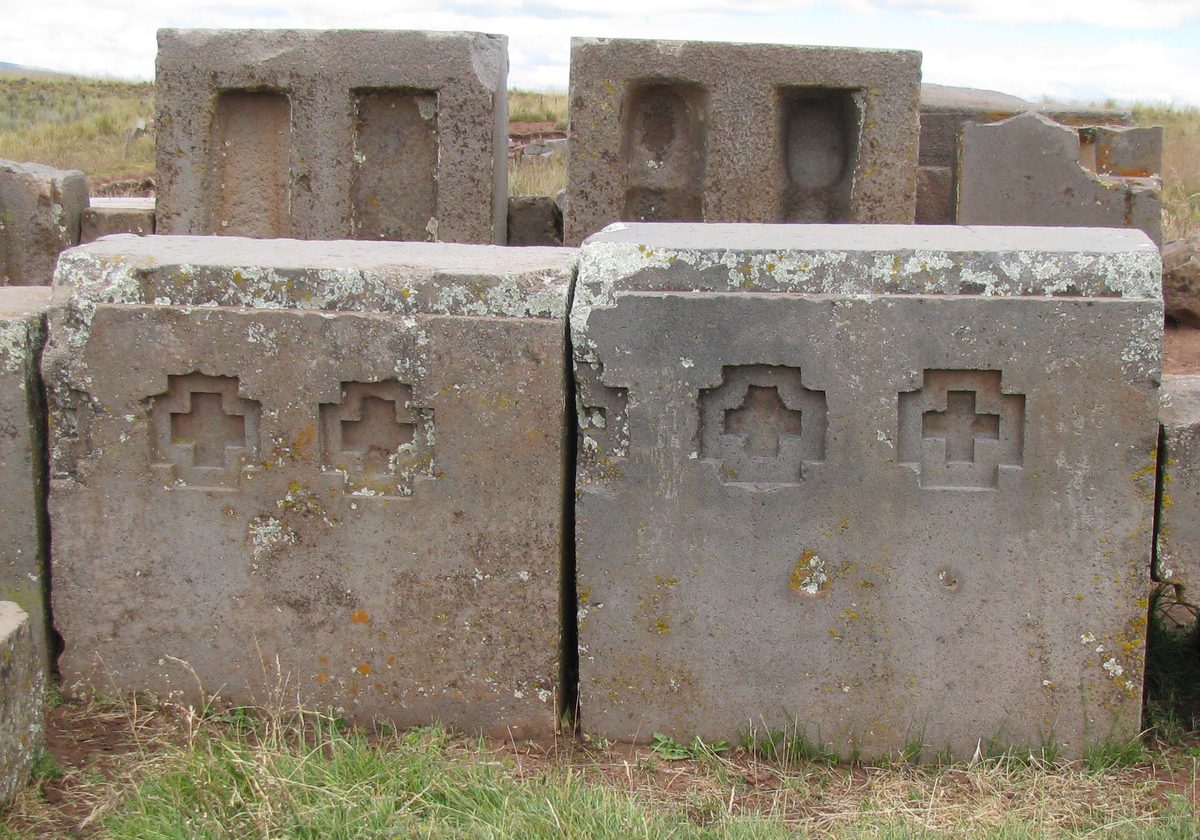
Puma Punku, high in the Andes of Bolivia, is famous for stone blocks so precise that fringe theories credit aliens, lost technology, or a civilization 17,000 years old 3. The reality is more grounded and, arguably, more impressive: it is a genuine Tiwanaku site built around 536 to 600 CE — roughly 1,500 years ago — and experimental archaeology has shown its precision can be reproduced with the stone tools the Tiwanaku actually had 14. Here is a fair, evidence-based look at the "impossible" ruins.
What Is Puma Punku?
Puma Punku, meaning "Door of the Puma" in Aymara, is part of the larger Tiwanaku archaeological complex in western Bolivia, near Lake Titicaca and about 72 kilometers from La Paz 1. Sitting at roughly 3,825 meters (12,549 feet) above sea level, it is one of the highest major archaeological sites on Earth 1. The site is built from red sandstone and andesite, and it is best known for its precisely cut blocks — including standardized "H-blocks" with flat faces, sharp right angles, and drilled holes that can look startlingly modern 3. Today the complex lies in scattered ruins, likely tumbled by earthquakes over the centuries 4.
How Old Is It Really?
Radiocarbon dating places Puma Punku's construction at approximately 536 to 600 CE, during the peak of the Tiwanaku civilization, with the broader site occupied from around 300 to 1100 CE 4. That makes the stonework about 1,500 years old — impressive, but far younger than the pyramids of Egypt 1. The claim that Puma Punku is 11,000 to 17,000 years old traces back to the early-20th-century researcher Arthur Posnansky, who estimated its age from archaeoastronomy rather than physical dating 4. That method has been discredited, and no radiocarbon evidence supports an Ice Age origin 4.
Who Built It?
Puma Punku was built by the Tiwanaku, a sophisticated Andean culture — not aliens or a vanished super-race 4. The Tiwanaku were skilled farmers who engineered raised-field "suka kollu" agriculture to prevent frost damage at high altitude, and they were accomplished metalworkers who produced bronze tools and copper clamps 4. The carvings on the stones use the Tiwanaku's own Yaya-Mama religious iconography, the shared artistic style of their culture, not a mysterious "alien code" 3. In other words, the builders were a real, advanced human society whose capabilities are well documented 1.
How Did They Cut Stone So Precisely?
This is the heart of the "mystery," and it has an answer 4. Experimental archaeology by Jean-Pierre Protzen and Stella Nair at the University of California, Berkeley demonstrated that Puma Punku's precision stonework can be replicated using stone tools available to the Tiwanaku, such as flint, quartzite, and obsidian 1. The method was to pound the rock with harder hammerstones — many of which are still found at the quarries — to rough out the shape, then grind and polish the surfaces with flat stones and sand 1. The standardized blocks suggest the use of templates and prefabrication, meaning careful planning rather than machinery 1. Some blocks were left unfinished, and they preserve exactly these hand-working techniques 4.
What About the Giant Blocks?
The scale is genuinely staggering 1. The largest red sandstone slab weighs an estimated 131 metric tons, and several megaliths fall in the 130-to-180-ton range 1. The sandstone was quarried about 10 kilometers away, while the harder andesite came from roughly 90 kilometers away, across Lake Titicaca 4. Moving these stones was a massive undertaking: researchers believe a large workforce ferried blocks across the lake in reed boats and then dragged them overland using ramps, inclined planes, and llama-skin ropes 1. It was an enormous organized effort — comparable to the megalithic feats at Stonehenge or the Egyptian pyramids, and equally human 4.
Why the Alien Theory Persists
The precision simply looks too modern to some observers, and the ruined, scattered state of the site adds to the sense of enigma 3. But popular claims are often exaggerated: the idea that "not even a razor blade fits between the stones" or that the drill holes are perfectly machine-cylindrical overstates a precision that in fact varies across the site 4. The alien and lost-technology framing was popularized by writers like Erich von Däniken and the Ancient Aliens series 3. At its core, the argument is one from personal incredulity — "I can't imagine how they did it, therefore aliens" — which is not evidence 4.
The Bottom Line
Puma Punku is a genuine Tiwanaku site roughly 1,500 years old, not alien technology or the relic of a 17,000-year-old lost civilization 4. Its precise stonework is real, extraordinary human skill, and it has been reproduced with the very tools the Tiwanaku possessed 1. The honest takeaway is a tribute to Andean engineering, not extraterrestrial visitors — and that story is remarkable enough on its own 4.
Related fact-checks: [Giorgio Tsoukalos and Ancient Aliens](https://innumbra.com/post/giorgio-tsoukalos-ancient-aliens-fact-check) and [Gunung Padang and the 'Oldest Pyramid'](https://innumbra.com/post/gunung-padang-oldest-pyramid-fact-check).
Frequently Asked Questions
How old is Puma Punku? Radiocarbon dating places its construction around 536 to 600 CE, about 1,500 years ago, not 17,000 4.
Did aliens build Puma Punku? No. It was built by the Tiwanaku culture, and its stonework has been replicated with the stone tools they had 1.
How were the stones cut so precisely? By pounding with hammerstones, then grinding and polishing with sand and flat stones — labor-intensive but achievable 1.
How heavy are the blocks? The largest red sandstone slab weighs roughly 131 tons, with some megaliths estimated at up to 180 tons 1.
Why do people think it's mysterious? The precision looks modern and the site is dramatically ruined, but the methods are well understood by archaeologists 4.