The Sphinx Water Erosion Theory
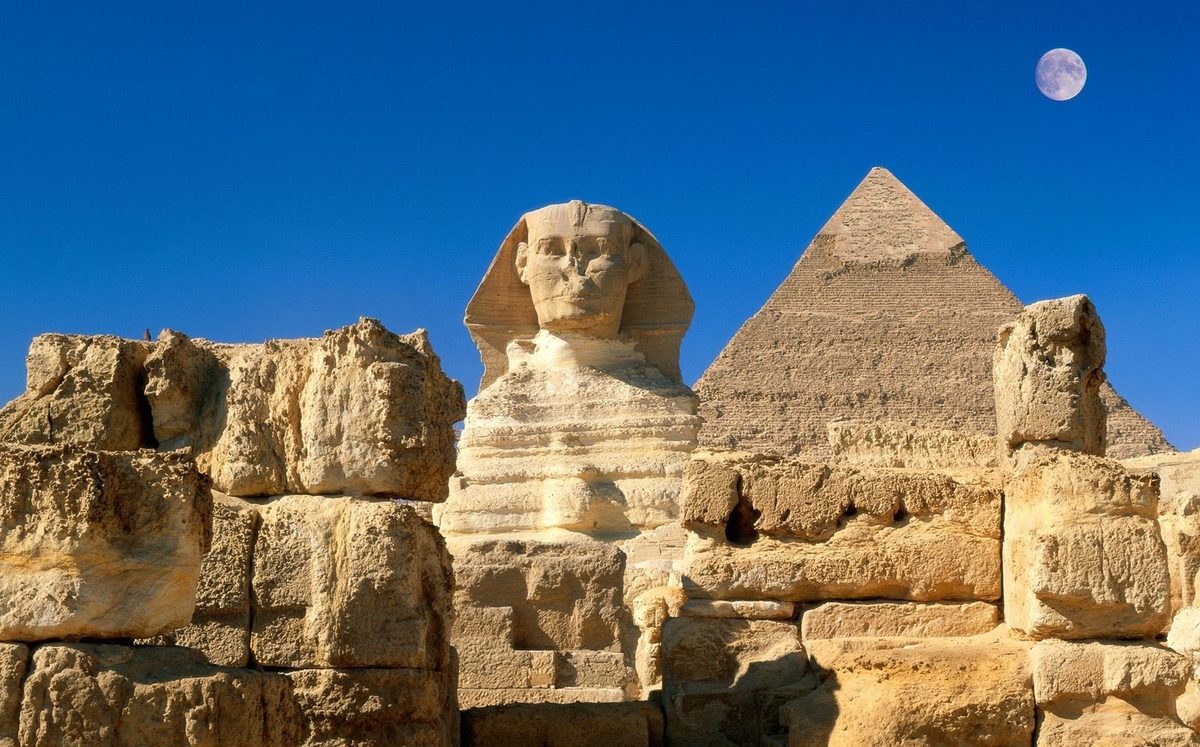
The Sphinx water erosion hypothesis is geologist Robert Schoch's claim that the Great Sphinx of Giza is thousands of years older than Egyptologists believe, because its weathering looks like the product of heavy rainfall rather than wind and sand 1. Unlike many alternative-history figures, Schoch is a credentialed scientist — a Yale-trained geologist and professor at Boston University — which is why his argument gets a serious hearing 2. Yet the hypothesis is rejected by the archaeological community and by most geologists, who explain the same erosion through other well-understood processes and point to strong evidence that the Sphinx was carved around 2500 BCE 1. Here is a fair look at both sides.
What Is the Sphinx Water Erosion Hypothesis?
The hypothesis proposes that the deep, vertical, undulating erosion on the Great Sphinx and its surrounding enclosure walls was caused by prolonged, heavy rainfall and water runoff 1. Because Giza has been hyper-arid for roughly the last five thousand years, proponents argue that such water damage must date to a much wetter climate — pointing to a possible construction date of 7000 to 5000 BCE or even earlier 3. This would place the Sphinx long before dynastic Egypt, contradicting the mainstream view that it was built as part of the Giza complex 1. The idea is often tied to speculation about a lost, earlier civilization 1.
Who Is Robert Schoch?
Robert M. Schoch is a geologist and geophysicist who earned his Ph.D. in geology and geophysics from Yale University in 1983 and became a professor at Boston University 2. His academic specialization is erosion processes and rock weathering, which is central to his Sphinx argument 3. The water-erosion idea did not originate with him — it was suggested decades earlier by R.A. Schwaller de Lubicz and popularized by alternative Egyptologist John Anthony West, who recruited Schoch to examine the site 1. Schoch first traveled to Egypt with West in 1990 and presented his conclusions at a Geological Society of America meeting in 1991 2.
What Is Schoch's Evidence?
Schoch's case rests on two main lines of geological observation 2. First, he argues that the rounded, vertical fissures on the Sphinx enclosure are diagnostic of precipitation-induced weathering, unlike the horizontal patterns that wind and sand typically produce on other Giza monuments 3. Second, his team conducted seismic surveys around the base of the Sphinx, using sound waves to measure the depth of subsurface weathering, which he interpreted as evidence of a very old, deeply weathered core body 2. Combining these, he concluded that the Sphinx's core must date to 5000 BCE or earlier 2.
Why Do Egyptologists Reject an Older Sphinx?
Most archaeologists attribute the Sphinx to the pharaoh Khafre around 2500 BCE, and they raise several strong objections 1. The Sphinx enclosure fits neatly into the overall architectural layout of the Giza complex, and limestone quarried from the enclosure was used to build nearby temples — indicating the structures are contemporaneous 1. The human-headed-lion sphinx form belongs to the Early Dynastic and Old Kingdom artistic tradition, not to any earlier period 3. Perhaps most decisively, there are no other monuments of comparable scale anywhere in Egypt from 7000 BCE, and no archaeological evidence of a civilization capable of building one at that time 3.
The Geological Counter-Explanation
Crucially, the debate is not simply geologists versus archaeologists — many geologists also disagree with Schoch 1. Critics argue the weathering can be explained by processes that operated long after the Old Kingdom, without requiring an ancient wet climate 1. Limestone can deteriorate through repeated wetting by a water-saturated sand cover and through salt crystallization within the porous rock, both of which attack the Sphinx more than the higher, drier tombs on the plateau 3. Occasional heavy rains and Nile-related moisture also persisted into dynastic times 1. In this view, the Sphinx's dramatic erosion reflects its low, moisture-trapping enclosure rather than a date thousands of years earlier 3.
So How Should You Weigh It?
This is a more genuine scientific disagreement than most fringe claims, precisely because Schoch is a real geologist making a testable argument 2. But being credentialed is not the same as being correct, and the weight of evidence runs against him 1. The erosion he describes is real, yet it has plausible explanations that do not require rewriting Egyptian history, and every independent line of archaeological evidence points to a 2500 BCE Sphinx 1. The honest conclusion is that the water erosion hypothesis remains a minority view that the broader scientific community has examined and rejected 1.
Related fact-checks on this site: [Star Forts Lost Technology](https://innumbra.com/post/star-forts-lost-technology-fact-check) and [Worlds In Collision Velikovsky](https://innumbra.com/post/worlds-in-collision-velikovsky-fact-check).
Frequently Asked Questions
What is the Sphinx water erosion hypothesis? The claim that the Sphinx's weathering was caused by rainfall, implying it is far older than 2500 BCE 1.
Who proposed it? It was popularized by geologist Robert Schoch and author John Anthony West in the early 1990s 1.
Is Robert Schoch a real scientist? Yes. He holds a Yale Ph.D. in geology and geophysics and teaches at Boston University 2.
Why do experts reject the older date? The Sphinx fits the Giza complex, its stone built nearby temples, and there is no evidence of a civilization in 7000 BCE Egypt 1.
How else is the erosion explained? Through salt weathering and periodic wetting of the limestone long after the Old Kingdom, not ancient rainfall 3.