Worlds in Collision: A Fact-Check
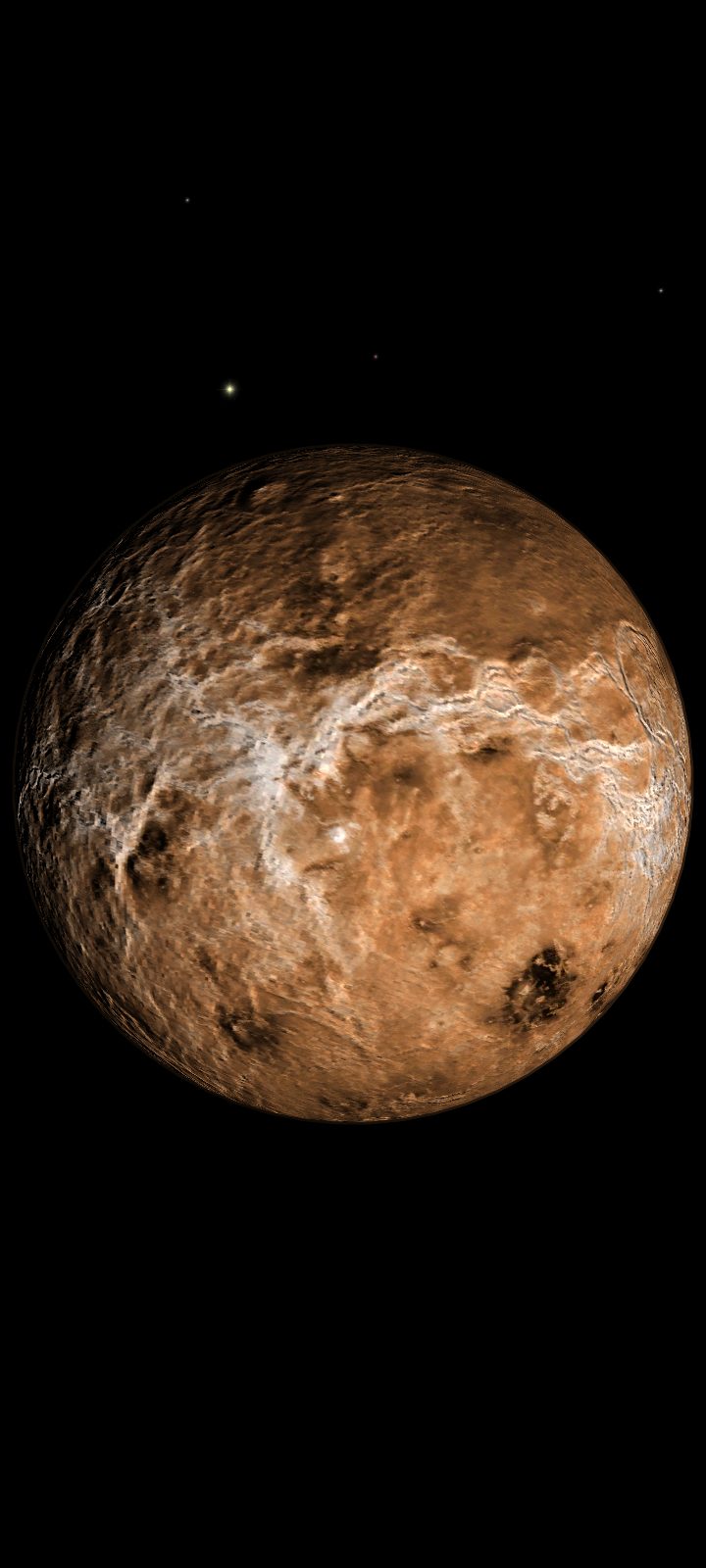
Worlds in Collision is Immanuel Velikovsky's 1950 bestseller claiming that the planet Venus was ejected from Jupiter as a comet around 1500 BC, nearly collided with Earth, and caused the biblical plagues of Exodus before settling into its present orbit 1. The book was a cultural sensation for nearly three decades, but it is a canonical example of pseudoscience, physically impossible and rejected by astronomers 1. Carl Sagan famously dismantled it with a list of ten devastating scientific problems, and Velikovsky's methods amounted to cherry-picking myths and misquoting scientists 23. Here is a fair look at the claim and why it fails.
What Does Worlds in Collision Claim?
Velikovsky argued that human myths and religious texts secretly record real cosmic catastrophes 1. His central scenario is that around the 15th century BC, Venus was violently expelled from Jupiter as a comet-like body 1. This "comet" then passed close to Earth, triggering worldwide disasters — which Velikovsky identified with the plagues and miracles of the Book of Exodus — before later encounters with Mars and eventual settling into a stable, near-circular orbit as the planet we see today 1. He used comparative mythology and ancient sources, including the Old Testament, as his evidence 1.
Who Was Immanuel Velikovsky?
Immanuel Velikovsky, who lived from 1895 to 1979, was a Russian-American psychoanalyst and writer — not an astronomer, physicist, or geologist 1. His training was in medicine and psychiatry, and he approached ancient history through the lens of comparative mythology 1. This matters because his most sweeping claims are about celestial mechanics and planetary physics, fields in which he had no formal expertise 1. His work is now frequently cited as a textbook case of pseudoscience and of the "demarcation problem" — the challenge of separating real science from imitations of it 1.
Why the Physics Is Impossible
The astronomer Carl Sagan presented a detailed critique, later published as an analysis with ten specific problems 3. The foundational one is that ejecting an object the size of Venus from Jupiter would require an almost unimaginable amount of energy, far beyond anything that could simply "disgorge" a planet 3. Orbital mechanics also forbid the rest of the story: a body on a wild cometary path cannot repeatedly graze Earth and Mars and then circularize into a stable, nearly round orbit within a few thousand years 3. And halting Earth's rotation, as the "sun standing still" would require, would release enough heat to melt the planet's crust — which plainly did not happen 3.
Where the Evidence Contradicts Him
Space exploration repeatedly refuted Velikovsky's specific predictions 3. He claimed the clouds of Venus were rich in hydrocarbons; in reality they are composed of roughly 75 percent sulfuric acid, so his "crucial test" failed 3. Defenders often note that Velikovsky said Venus was hot and that Jupiter emits radio waves, both of which turned out to be true 3. But the surface heat of Venus comes from a runaway greenhouse effect in its dense carbon dioxide atmosphere, not from a recent fiery birth, and Jupiter's radio emissions come from its magnetic field, not an electrified encounter 3. The right answers for the wrong reasons do not rescue the theory 3.
The Problem With His Method
Beyond the physics, Velikovsky's scholarship was deeply flawed 3. His approach was classic confirmation bias: he selected myths and passages from around the world that seemed to fit his scenario while ignoring the vast body that did not 3. Critics also documented that he distorted the scientific literature he cited, at times quoting researchers as saying the opposite of what they actually wrote 1. When a theory is supported only by cherry-picked data and misrepresented sources, it is telling us about the author's preferred conclusion, not about the world 3.
Legacy and the Suppression Controversy
Velikovsky's story is historically important beyond the science 2. As the historian Michael Gordin has documented, scientists reacted so fiercely that pressure was put on his original publisher, and the book was transferred to another house — an attempt at suppression that even some of Velikovsky's critics, including Sagan, condemned 2. The episode helped define the modern boundary between science and the fringe 2. Velikovsky is now seen as a root of later pseudohistory and catastrophist thinking, including the revised-chronology ideas that influenced theories like Fomenko's New Chronology 1. Notably, mainstream science does accept catastrophism in a very different form — real asteroid and comet impacts — but not Velikovsky's planetary billiards 1.
Related fact-checks on this site: [Star Forts Lost Technology](https://innumbra.com/post/star-forts-lost-technology-fact-check) and [Phantom Time Hypothesis](https://innumbra.com/post/phantom-time-hypothesis-fact-check).
Frequently Asked Questions
What is Worlds in Collision? Immanuel Velikovsky's 1950 book claiming Venus was a comet that nearly hit Earth around 1500 BC 1.
Was Velikovsky a scientist? He was a psychoanalyst and writer, with no formal training in astronomy or physics 1.
Why is the theory rejected? Ejecting Venus from Jupiter and circularizing its orbit are physically impossible, as Carl Sagan detailed 3.
Didn't Velikovsky predict a hot Venus? Yes, but for the wrong reason; its heat comes from a greenhouse effect, not a recent origin 3.
Is any catastrophism accepted? Yes — real asteroid and comet impacts — but not Velikovsky's planetary near-collisions 1.